Lake Ontario Crossing Record Book (PDF)
The ultimate challenge for any LOST Swimmer, or for any marathon swimmer, is a Lake Ontario Crossing. Here is the list of swimmers that have accomplished that feat and some interesting facts about these swims...
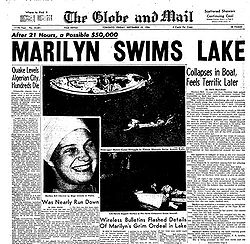
Interesting Facts about Lake Ontario Crossings:
- Total Crossings: 66 (Sep 19, 2013)
- Number of People to Cross: 54
- Multiple Crossings: Jim Woods 2, Marilyn Korzekwa 2, John Munroe 2, John Scott 2, Kim Lumsdon 2, Colleen Sheilds 2, Kim Middleton 3, Vicki Keith 6
- Double Crossing: Vicki Keith (95 km)
- People who have swum the English Channel and Lake Ontario: 12, including: Marilyn Bell, Brenda Fisher, Vicki Keith, John Kinsella, Magdy Mandour, Kim Middleton, Cindy Nicholas, Loreen Passfield, Paolo Pinto, Claudio Plit, Marilyn Korzekwa, Madhu Nagaraja
- Distance: varies given different starting and finishing points, 33 – 57 km
- Distance of English Channel: 34 km
- How much longer it takes to swim Lake O than the EC, on average: 49%
- Average age: 31
- Earliest date: July 23
- Latest date: Sep 9
- Swims per month: July: 8, Aug: 50, Sep: 7
- Fastest crossing: 13:49, John Kinsella, 1976 (51 km)
- Slowest crossing: 41:01, Jay Serdula, 2008 (45 km)
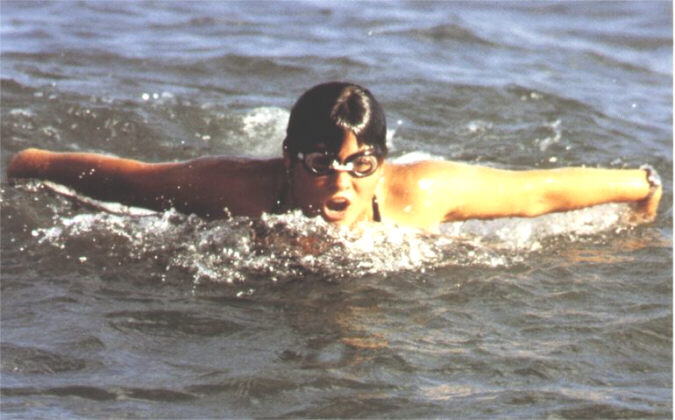
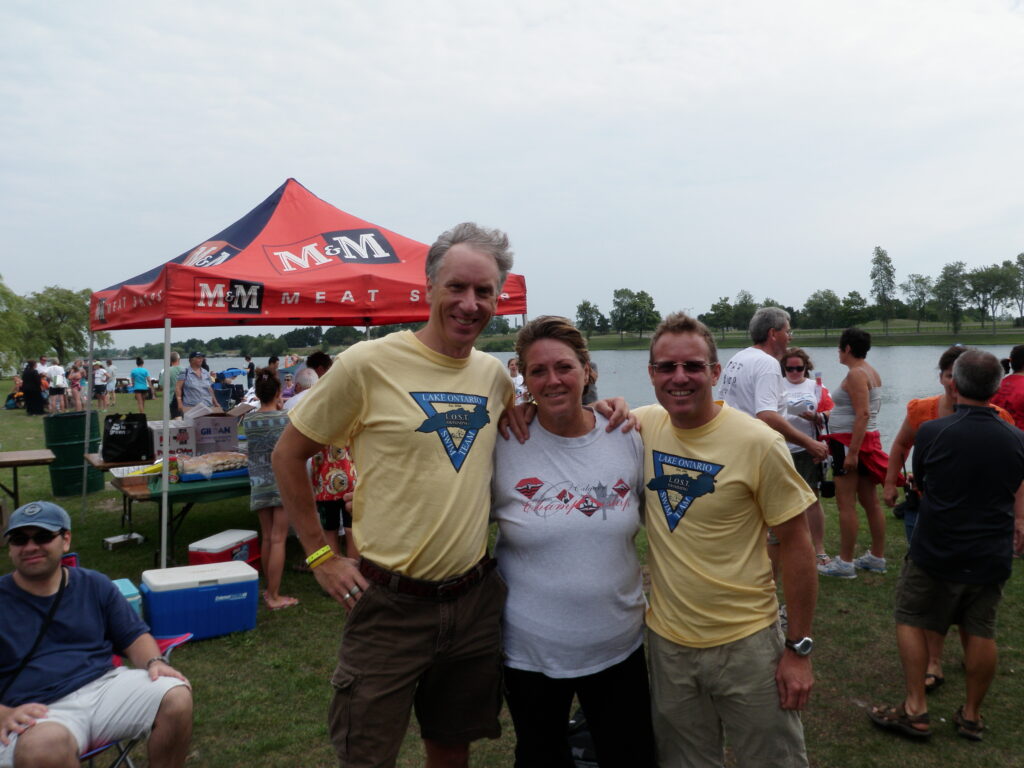
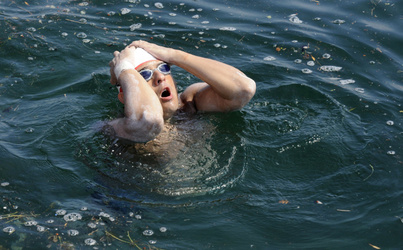
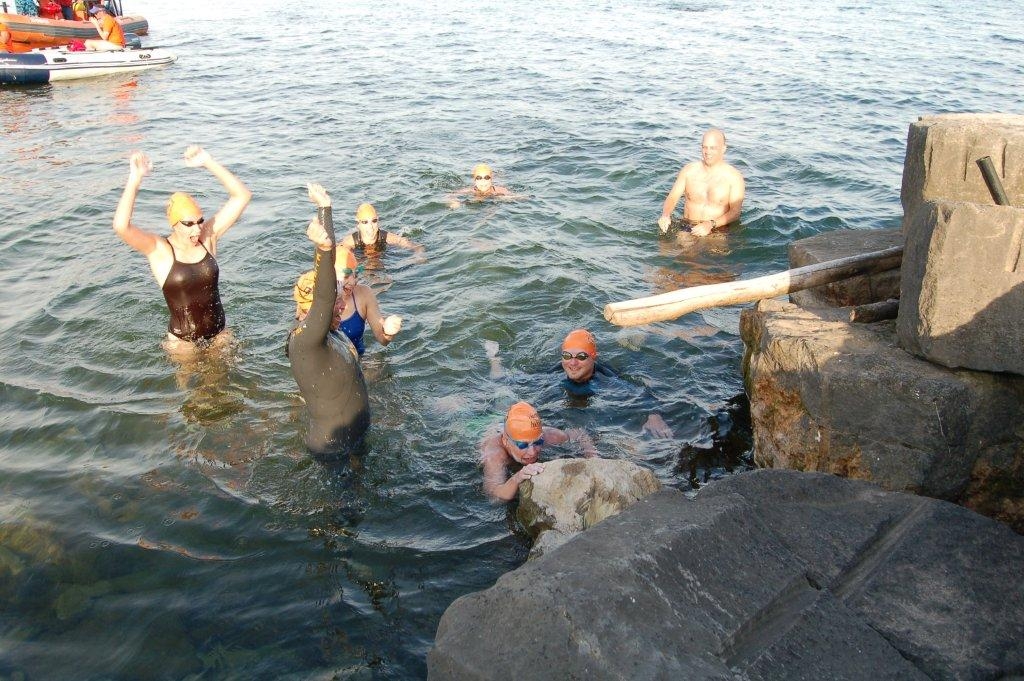
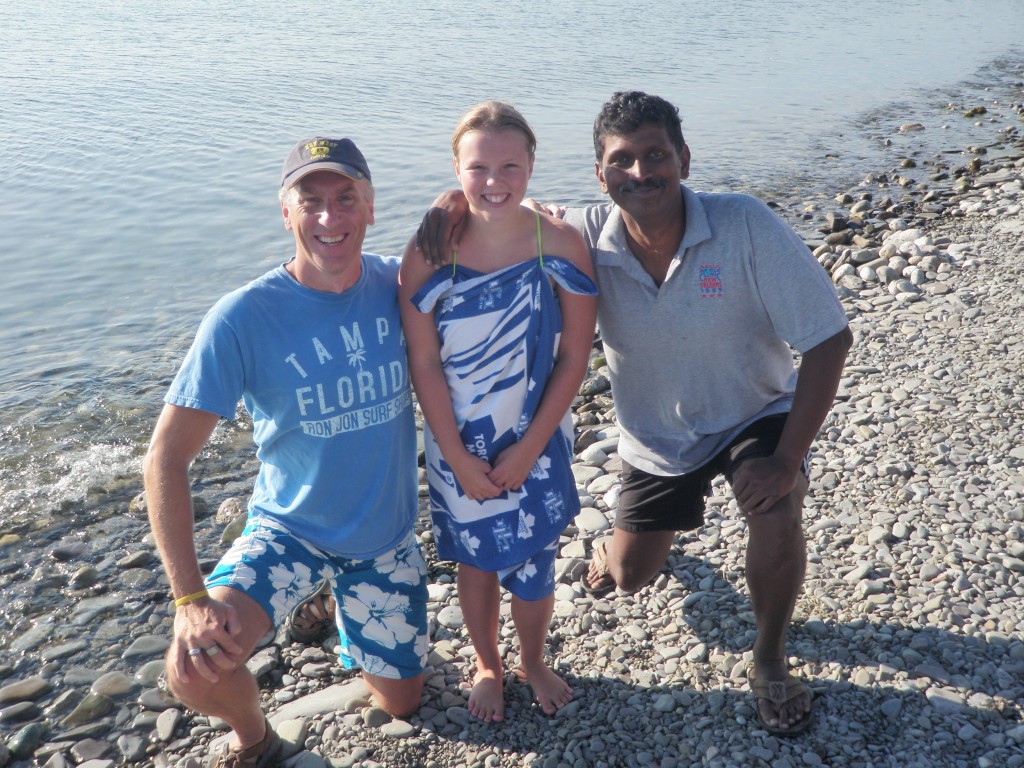
Lake Ontario Crossing Gallery

Rules of Marathon Swimming
The Marathon Swimmers Federation (MSF) Rules of Marathon Swimming are a set of standards and guidelines for undertaking a solo, unassisted open-water marathon swim in any body of water.
MSF Rules may be used by any swimmer who wishes to attempt a swim for which there is no local governing body. They also may be used by local governing bodies wishing to adopt a global standard — or as a foundation upon which to establish local exceptions.
The Spirit of Marathon Swimming
Marathon swimmers embrace the challenge of crossing wild, open bodies of water with minimal assistance beyond their own innate physical strength and mental fortitude. There are ways to make the sport easier, but marathon swimmers consciously eschew them.
Marathon swimmers take pride that their achievements can be meaningfully compared to the achievements of previous generations, because the standard equipment of the sport has not changed significantly since 1875.
Key Definitions
- Marathon Swim: A nonstop open-water swim requiring at least several hours of sustained effort to complete. Ten kilometers without significant assistance from currents is the minimum distance.
- Nonstop: Remaining in the water for the entire duration of the swim from start to finish without intentional physical contact with escort vessels, support personnel, or other objects.
- Unassisted: Without artificial assistance to performance, other than the standard equipment of the sport.
Standard Equipment
- One swimsuit made of porous, textile material
- One bathing cap made of latex or silicone
- Goggles, earplugs, and noseclips
- Sunscreen and grease
- Escort boat, pilot, and crew
- Nutrition, and equipment to transport it between the boat and swimmer
- Paddlers and support swimmers
- Observer(s)
Nonstandard Performance-Enhancing Equipment (Not Allowed)
Swims using nonstandard, performance-enhancing equipment cannot be considered unassisted. Examples include:
- Equipment that may retain or increase warmth – e.g., wetsuits, neoprene caps, booties, gloves
- Equipment that may increase speed – e.g., flippers, paddles, shark cages
- Equipment that may increase buoyancy – e.g., pull buoys, wetsuits
- Auditory pacing aids – e.g., music players, metronomes
- Electronic devices attached to the swimmer – e.g., wristwatches, navigation aids
- Underwater streamers
- Performance-enhancing drugs on the WADA Prohibited Substances list
Swim Rules Summary
- Start & Finish: The swim begins when the swimmer enters the water from a natural shore. The swim finishes when the swimmer clears the water on a natural shore.
- Physical Contact: The swimmer may not make intentional supportive contact with any vessel, object, or support personnel at any time during the swim.
- Drafting: The swimmer may not intentionally draft behind any escort vessel or support swimmer.
- Support Swimmers: May accompany the solo swimmer for a limited duration (max 1 hour per support swim, min 1 hour between).
- Authority: The pilot of the escort vessel is the ultimate authority and may cancel the swim at any time for any reason.
- Environmental Stewardship: Everyone involved must treat the environment respectfully and prevent avoidable harm to marine wildlife.
Source: Marathon Swimmers Federation Rules. Last Updated: January 6, 2014.